I still remember the first time I saw it.
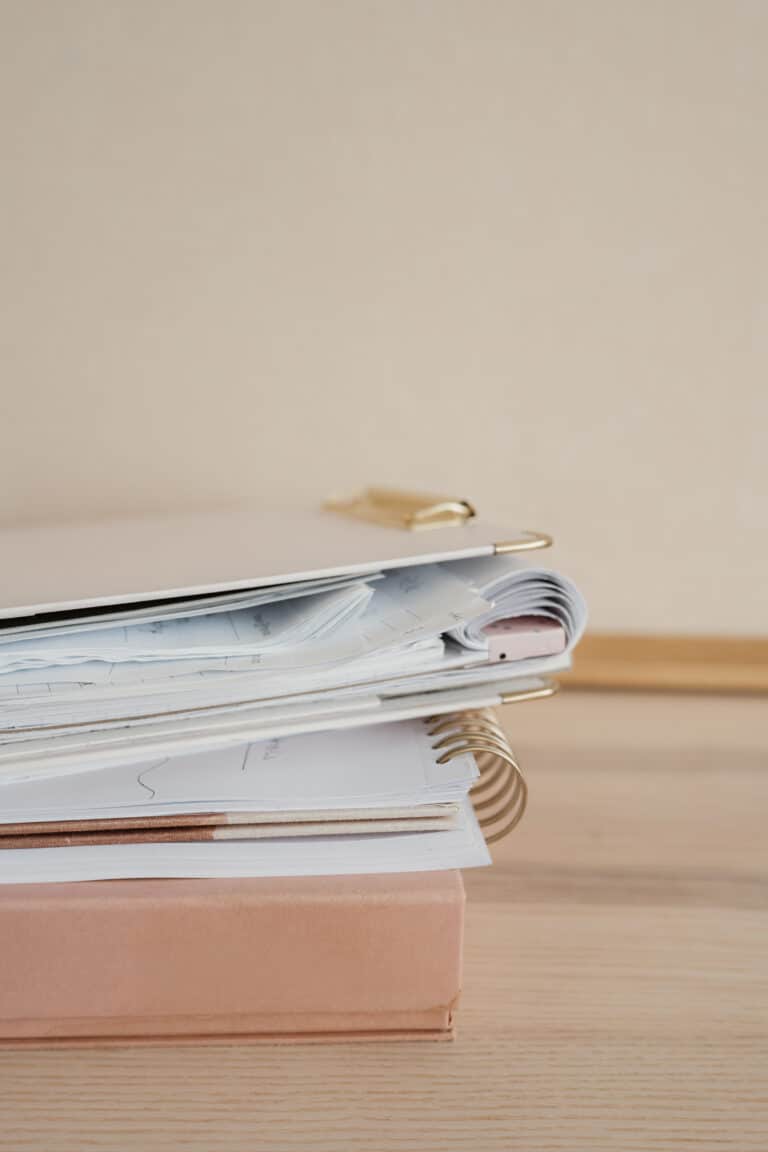
The beautiful Martha Stewart Customizable Notebook planner system.
A friend of mine had one. She had four kids and was effortlessly organized—the kind of homemaker who was always calm, knew what was for dinner that night (and every other night that week, for that matter), and who somehow never seemed to forget anything important.
I was convinced the planner was part of her mystique.
If I could just get one of my own, I imagined my life would start looking a lot more Martha Stewart…and a lot less me.
So I loaded my toddler into the car and drove from Staples to Staples trying to track down every piece of the system. Some items were sold out, so I special ordered them.
Nearly $200 later, I had the planner of my dreams.
Unfortunately, after weeks (and then months) with said dream planner, my life looked exactly the same.
The pages were beautiful.
My thoughtful and deliberate handwriting looked prettier.
But I was still forgetting things. I was still overwhelmed. I was still spending more time trying to organize my life than actually living it.
Before kids, homemaking was relatively simple. My husband and I were out most evenings, dinner was often whatever sounded good on the way home, and staying on top of the house meant picking up the dry cleaning, throwing together a weekend meal, and doing enough cleaning to keep things looking pretty good.
Then I became a mom.
Almost overnight, it felt like someone had handed me an entirely new job – and one without a training manual.
Suddenly I wasn’t just remembering my own schedule.
I was keeping track of school calendars, permission slips, pediatrician appointments, grocery lists, birthday parties, playgroups, extracurricular activities, favorite recipes, meal plans, holiday traditions, and about a thousand tiny details that somehow all became my responsibility to remember.
No one task was particularly difficult. It was the sheer number of moving pieces. Every day seemed to come with one more thing to remember, one more paper to keep, one more date to write down, one more system to maintain.
So I did what I think a lot of us do.
I assumed the problem was that I was missing just the right solution.
Maybe I just hadn’t found the right planner yet.
The magic one that made all things run perfectly.
So I bought another planner.
Then another notebook.
Then another organizing system.
Each one promised to simplify my life.
Instead of getting more organized, I just created more places to look.
More duplicate effort. More info scattered across different notebooks and my phone and my computer.
Eventually, I realized I wasn’t forgetting things because I wasn’t organized enough.
I was forgetting things because I was asking one tool to do too many jobs.
The poor planner was my calendar, file cabinet, recipe book, household task manual, school binder and my brain all at once.
No planner is designed to carry that weight.
Today, almost everything in my life lives digitally.
My calendar. Meal plans. Family schedules. Documents. Household reminders by month.
Anything that changes regularly.
But I still keep one simple binder for the things I never want to search for.
Rather than everything on paper, I only keep info that saves me time, reduces stress, and makes everyday life easier.
That’s the system that finally worked.
It’s my family’s reference manual.
What Is a Family Reference Notebook?
A family reference notebook is not a planner. It is not where you track every appointment, task, or thing you need to do.
It is the place where you keep the information you reach for again and again.
Think of it as your family’s instruction manual — the things you have already figured out and don’t want to recreate every time you need them.
What belongs in your notebook
If you try and use the notebook to capture every detail of your life, you’ll create clutter and make your organization systems exhausting.
Your notebook should hold information that:
- You need to access quickly.
- You use repeatedly.
- Does not change often.
- Would be annoying to recreate.
Instead of scattered sticky notes, random papers, and magnets on the fridge, everything now has one dependable home.
Let me clarify that my notebook is where information goes after I’ve figured it out.
You won’t find me brainstorming or tracking daily tasks. It is where I keep the things that already work.
Here is how I arrange mine:
Meals
Favorite family recipes
The recipes I have already perfected and that my family actually loves to eat.
Trader Joe’s emergency meals
My list of quick meals I know I can make when something goes wrong. For example, the other day my ground turkey went bad before the expiration date. Luckily, I had enough ingredients on hand to quickly pull one of these meals together.
If you need ideas, you can check out my Trader Joe’s quick meals article here.
Kids
School calendar
Prior to the family reference manual, I was surprised every time a staff development day popped up ‘out of nowhere’. Having this information in one place saves me from searching through emails or school websites every time I need a date.
School day routine
This has helped me ask better questions about my kids’ days than the classic “How was school?” For example: “What did you like about STEM today?”
Extracurricular schedules
I keep activity schedules and what we need each day handy so I can check before we walk out the door.
Miscellaneous Home and Family Information
Reference information
This is where the miscellaneous but important information lives — the things I need occasionally but never want to search for. Coupons. Random but important information–like which sprinkler head controls which part of the lawn.
Other Things You Might Add to Your Notebook
Every family has different information they need to keep handy. Depending on your season of life, you may want to include:
Seasonal & Traditions
- Vacation and travel packing lists
- Holiday traditions
- Holiday planning
- Party checklists
Home
- House measurements
- Paint colors
- Cleaning routines
- Home maintenance information
Family & Kids
- Babysitter information
- Toddler meal guides
- Kid lunch ideas
- Pet information
Personal Reference
- Gift ideas
- Important lists and reminders
(Personally, gift ideas live on my phone because I don’t want future surprises accidentally discovered. You know your people.)
Some of these used to be printables for me, but our needs have evolved. The best system is the one that changes with your family.
One simple rule: No daily clutter.
What should stay digital
For me, keeping these items digital eliminates duplicate work and makes it much easier to keep everything up to date.Trying to keep everything on paper is exactly what created more work for me.
These are the things I intentionally keep digital:
- Calendar
- Appointments
- Meal planning
- Documents
- Bills
- Photos
- Shared family schedules
- Anything collaborative
- Anything that changes frequently
Organize it like a library
One mistake I’ve made in the past is organizing the notebook chronologically, as if it’s a journal.
I found it served me better when I reorganized it by category.
If you’re looking for your travel packing list six months from now, you’ll remember “Travel.” You probably won’t remember whether you wrote it in March or September..
Let the System Grow With You
No need to strive for one notebook forever. As your family grows, the system can grow with it.
My favorite family recipes eventually became their own binder. Kid information lives in another binder.
The key is having one single place to look.
They’re still together, still easy and still one system.
If maintaining your notebook starts creating more work instead of less, it’s time to simplify or rethink the system.
If You Still Love Paper Planners
There’s absolutely nothing wrong with keeping a planner.
In fact, I still think a good planner can be incredibly helpful for managing appointments and weekly priorities if you are not the digital calendar type.
A few planners I’ve personally liked include:
- The Confident Mom
- Clean Mama
- Emily Ley
Just remember:
Your planner manages your schedule.
Your notebook stores your systems.
Two very different jobs.
Wrap Up
The goal of organization is to create a system to reduce the number of decisions you have to make each day.
A home for the things you shouldn’t have to remember.
A simple notebook filled with the information you reach for again and again can become one of the most useful tools in your home.
Start small. Add what you use. Ignore what you don’t. Over time, you’ll build a personal reference guide that makes everyday life just a little easier.