
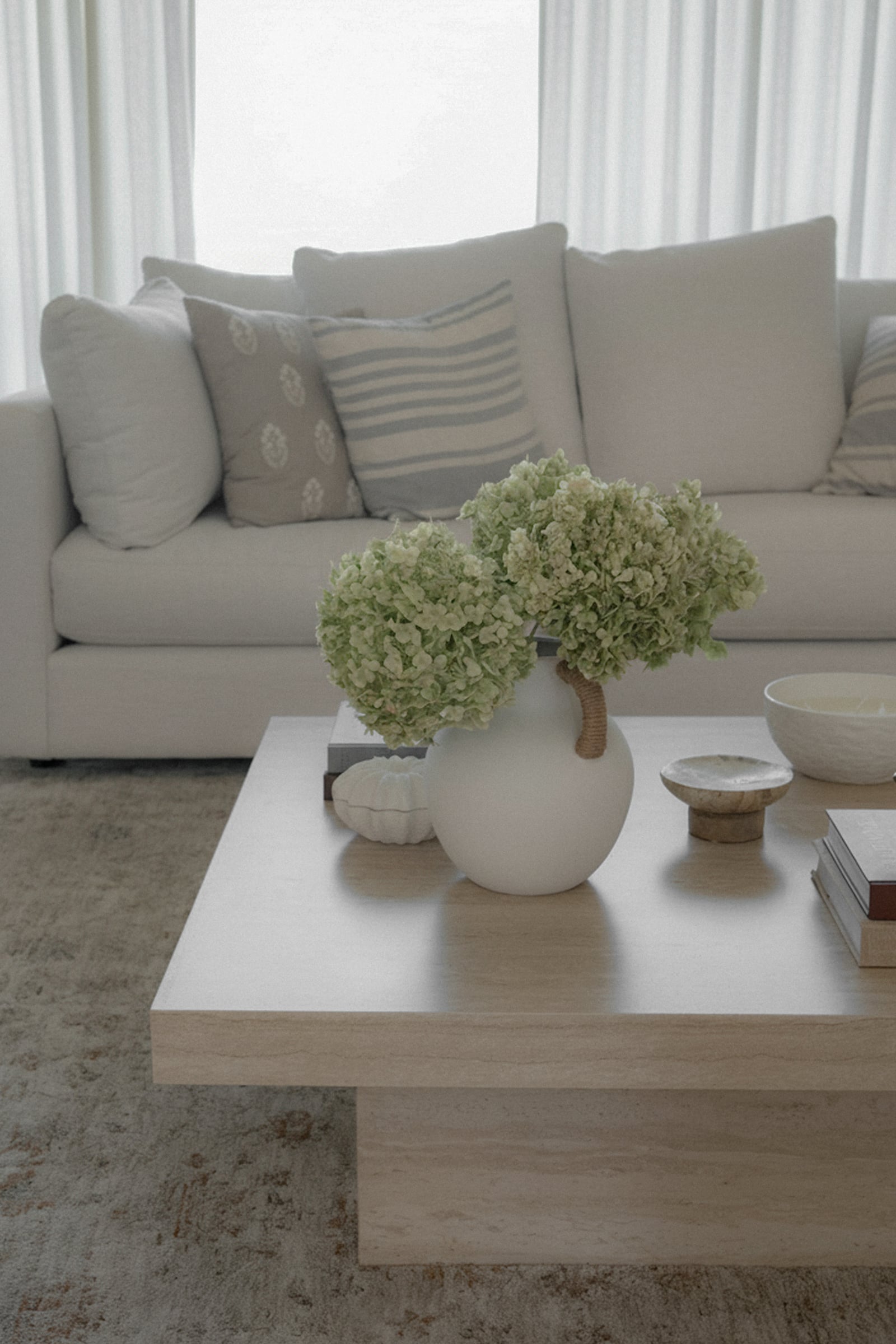
How to Make Your Home Feel Expensive Without a Renovation
Luxury isn’t square footage. (My house is 1,500 square feet.)
I am, by nature, a frugal person. When we moved into our first house, I was not eager to spend a pile of money on renovations. But I did want it to feel stylish. Beautiful. Elevated.
I realized then — and I still believe this most days — that luxury isn’t marble countertops or a full gut remodel. That’s fortunate, because our home was renovated in 2000. By the time I’m writing this (2026), it’s dated.
And still, at times, it has felt genuinely elevated.
Luxury isn’t excess.
Luxury is intention.
And intention costs far less than renovation.
Here’s how to make your home feel expensive using what you already have — no demo day required.
1. Remove 30% of What’s Visible
Most homes don’t lack style.
They lack editing.
- Clear 30% off open surfaces (coffee tables, counters, nightstands).
- Leave negative space.
- Let a few pieces breathe.
Luxury equals restraint.
A beautiful home doesn’t feel tense. It feels peaceful.
2. Upgrade Lighting Before You Upgrade Furniture
Lighting is mood.
Mood is luxury.
Start here:
- Replace builder-grade bulbs with warm light (2700K–3000K).
- Add one lamp to every dark corner.
- Use matching bulbs throughout a room.
- Install dimmers where possible.
A $60 lamp will elevate a room faster than a $600 chair.
When we moved in and didn’t want to allocate funds to a full renovation, one of the first things we did was update the light fixtures. For a reasonable price (plus an electrician – not DIYers), it took the house from 2000 to at least this millennium.
3. Use Paint and Hardware to Create a Custom Look
Never underestimate the power of paint.
Ugly wood paneling?
Dated kitchen cabinets?
It may not be perfect, but you can get 75% of the way to a stylish look simply by changing paint color and updating cabinet pulls.
If you have real wood cabinets, you’re already ahead. We started with what I’m fairly certain was the Home Depot “cheapest possible” special — painted in pristine “Y2K” fashion.
Fresh paint. Updated hardware. A simple backsplash.
Suddenly, the room felt intentional.
4. Add Texture Before You Add More Decor
This is one place we didn’t skimp. We invested in beautiful curtains. Not designer. Not custom. Just thoughtfully chosen panels that worked with our color palette.
Luxury reads through materials, not quantity.
- Linen instead of polyester.
- Real wood tones instead of laminate shine.
- Wool or cotton throws instead of synthetic fleece.
- Structured or velvet pillows instead of flat, flimsy fabric.
You don’t need more decor.
You need better-feeling layers.
5. Repeat One Design Element on Purpose
Repetition makes a room feel designed.
- The same black accent in three places.
- Matching frames.
- One consistent wood tone.
- One metal finish (avoid chrome, brass, and nickel competing).
When we refreshed our home, we committed to black accents throughout. Even though our cabinets are basic stock, the repetition makes everything feel cohesive.
Designers repeat.
Amateurs scatter.
6. Hide Everyday Items Strategically
Visible chaos makes a home feel cheaper — even if nothing in it is.
- Baskets for remotes.
- Trays for bathroom counters.
- Closed storage for paperwork.
- Decant soap into matching dispensers.
You’re not pretending you don’t live there.
You’re just not putting everything on display.
7. Maintain Your Home Like a Boutique Hotel (When It Matters)
I would not keep my home in boutique-hotel condition every day. But when you’re hosting guests or want the space to feel elevated, small maintenance details matter.
- Steam curtains.
- Iron pillowcases.
- Replace pilled throws.
- Touch up chipped paint.
- Wash the windows.
Maintenance is one of the most underrated ways to make your home feel expensive.
8. Elevate One Daily Ritual
Luxury is often sensory.
A friend once embraced the hygge movement. When I walked into her home, a candle was burning, something warm simmered on the stove, blankets were folded neatly, and coffee cups were ready. I felt instantly transported.
Try this:
- Use a tray for your morning coffee.
- Switch to cloth napkins at dinner.
- Light a candle at 6 p.m.
- Play music instead of turning on the television.
An elevated ritual costs less than a renovation — and changes how your home feels immediately.
9. Add One Living Element
Nothing makes a house feel luxurious faster than something alive.
I found an elephant ear plant at Costco for under $30 (including the pot). It has lasted forever and requires very little maintenance — which is ideal, because I am not exactly a green thumb.
Other simple options:
- A grocery-store bouquet trimmed low in a real glass vase.
- A bowl of lemons on the counter.
- A single potted plant with breathing room around it.
Fresh flowers don’t need to be extravagant.
They just need to be intentional.
10. Go Bigger — But Less Often
Undersized decor reads budget.
Instead:
- One oversized bowl on a coffee table.
- One large piece of art instead of a gallery of tiny frames.
- An 8×10 print placed inside several oversized frames for impact.
- Full-length curtains hung higher and wider than the window.
Scale creates confidence.
The Secret to an Expensive-Feeling Home
An expensive-feeling home isn’t about what you buy.
It’s about what you remove.
What you repeat.
What you maintain.
And what you make intentional.
Luxury isn’t excess.
It’s intention.
If you’re redefining luxury as thoughtful living rather than overspending, I share the full framework here → Live a Luxury Life on a Budget.