If I have learned anything from 14 years in a 1,500-square-foot house—with no garage, no kitchen pantry, and no true laundry room—through a variety of seasons (kid gear, pet gear, outdoor gear, and everything in between), it’s this: You don’t need a big house to create a space that feels luxurious.
In fact, I think having less space can sometimes force you to make better decisions about your home. When you don’t have room for endless furniture, accessories, and piles of stuff, every square foot—and everything you bring into it—needs to work harder.
A small space can feel every bit as welcoming, beautiful, and completely yours.
Here are a few things I’ve found make a surprisingly big difference:
1. Invest in Built-Ins
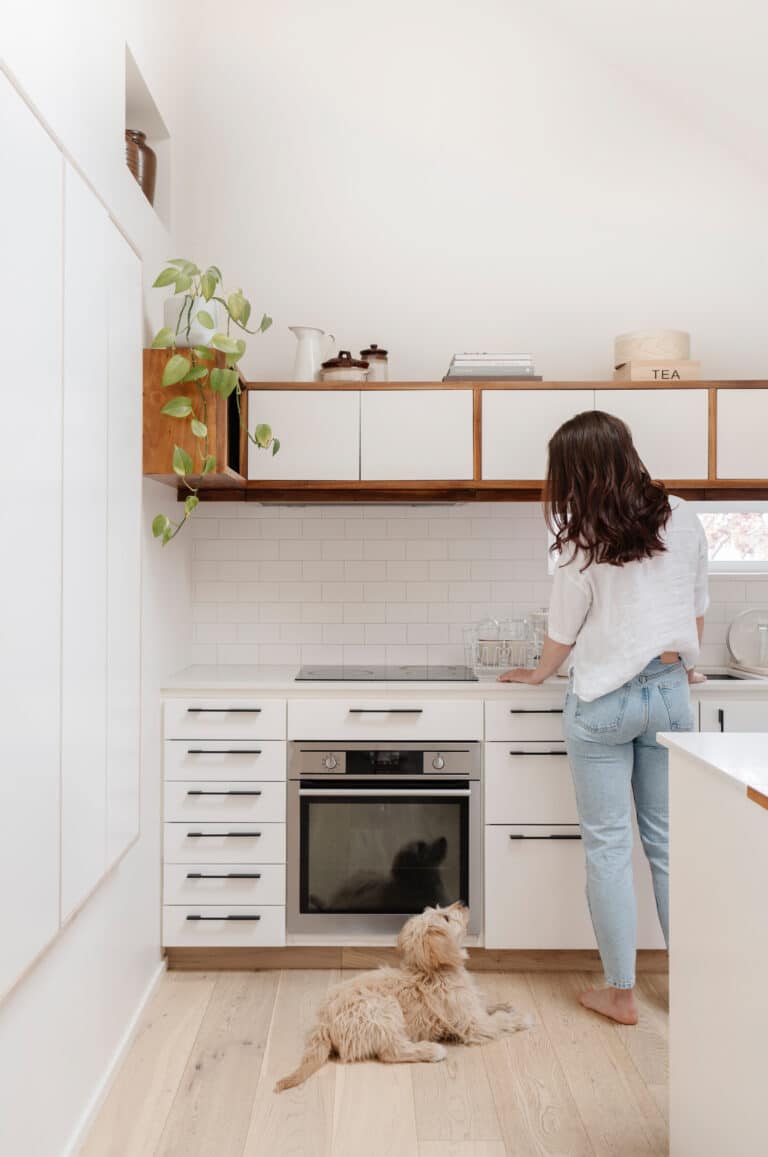
If you’re short on space, built-ins can be worth every penny.
They take advantage of space that might otherwise go unused while giving the room a finished, intentional look. Instead of trying to squeeze another piece of furniture into the room, you’re making the architecture of the room work for you.
And there’s something about built-ins that instantly makes a space feel more custom—and therefore more expensive.
You don’t necessarily need floor-to-ceiling cabinetry throughout your house. Even a well-designed built-in around a fireplace, a window seat with storage, or a wall of shelving can make a small space feel much more considered.
2. Splurge on Faux Florals
I know. This one sounds, uh, antiquated. Maybe frivolous.
But hear me out.
When you don’t have a lot of space for decorative objects, I think it’s worth spending a little more on the things that make a visual impact.
A well-crafted faux floral arrangement can do a lot of work. It adds color, texture, height, and life to a room without requiring another piece of furniture or a collection of little decorative objects.
And because it doesn’t need to be replaced every week, this is one place where I think spending a little more can actually make sense.
One great arrangement > six mediocre little decorations.
3. Use Books as Decor
Books are one of my favorite ways to make a home feel collected rather than decorated.
They add color, texture, height, and personality—and unlike a lot of decorative objects, they have an actual purpose.
Stack a few beautiful books on a coffee table. Use them to add height to a shelf. Mix them into a built-in. Let the colors of the spines become part of the room.
Use the books you actually love. Let them be a conversation starter with guests.
A small home benefits from objects that can do more than one job, and books are a perfect example.
4. Spend on Your Windows and Doors and Fixtures
This might be one of my favorite small-space decorating tricks.
When you don’t have a lot of room for furniture and accessories, the things that are already part of the house become even more important.
In a small house windows and doors and fixtures can become part of your decor.
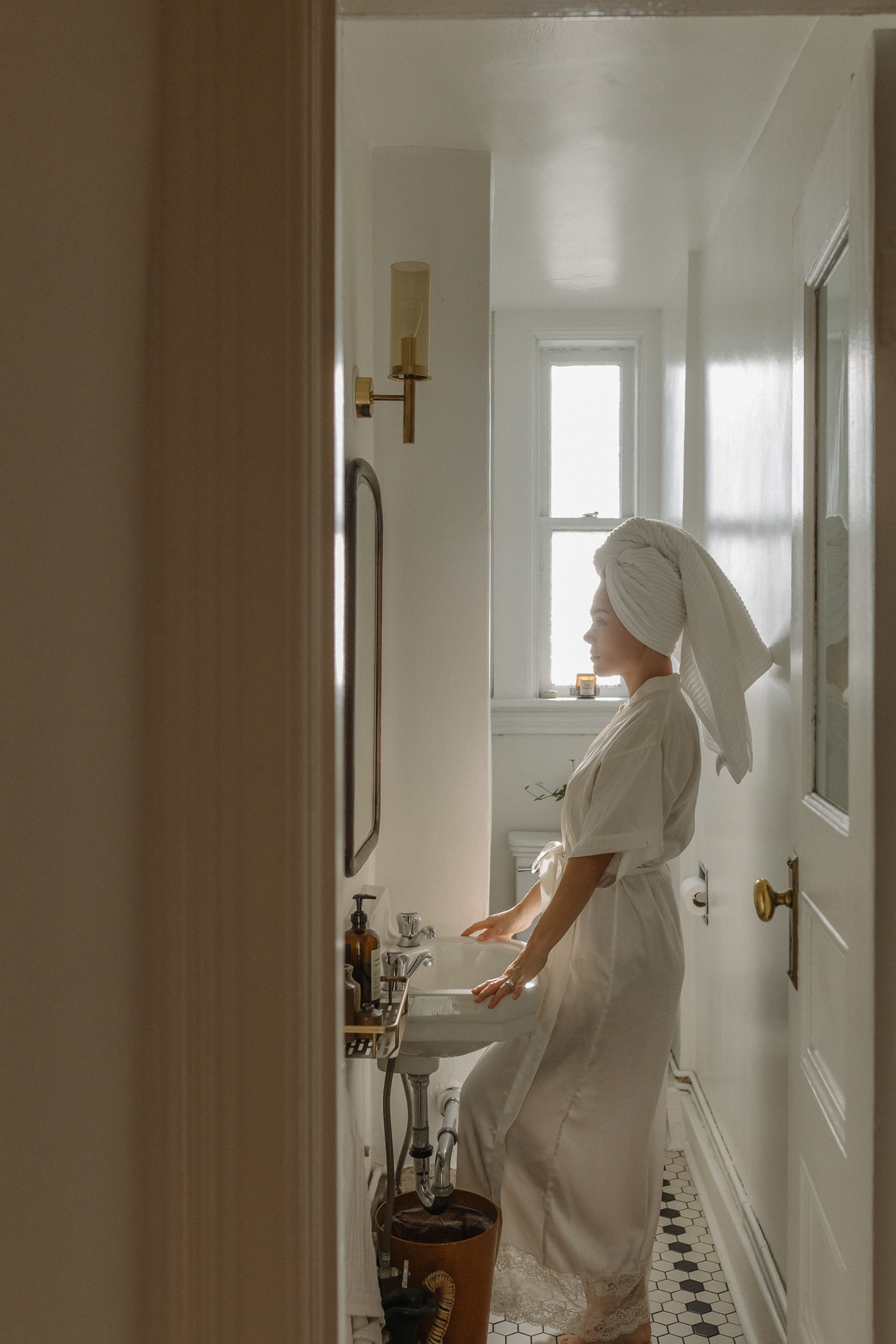
Beautiful doors, good hardware, thoughtful window treatments, interesting trim, and well-proportioned curtains can completely change the feeling of a room without taking up another inch of floor space.
In a large home, you can sometimes distract from mediocre architectural details with furniture and accessories.
In a small home, there’s nowhere to hide.
So if you’re deciding where to put your decorating dollars, don’t automatically spend them on more stuff.
Spend some of them on the things that are already attached to the house.
5. Ditto Rugs
The same principle applies to rugs.
When you don’t have a lot of furniture in a room, the rug becomes a much bigger part of what you see.
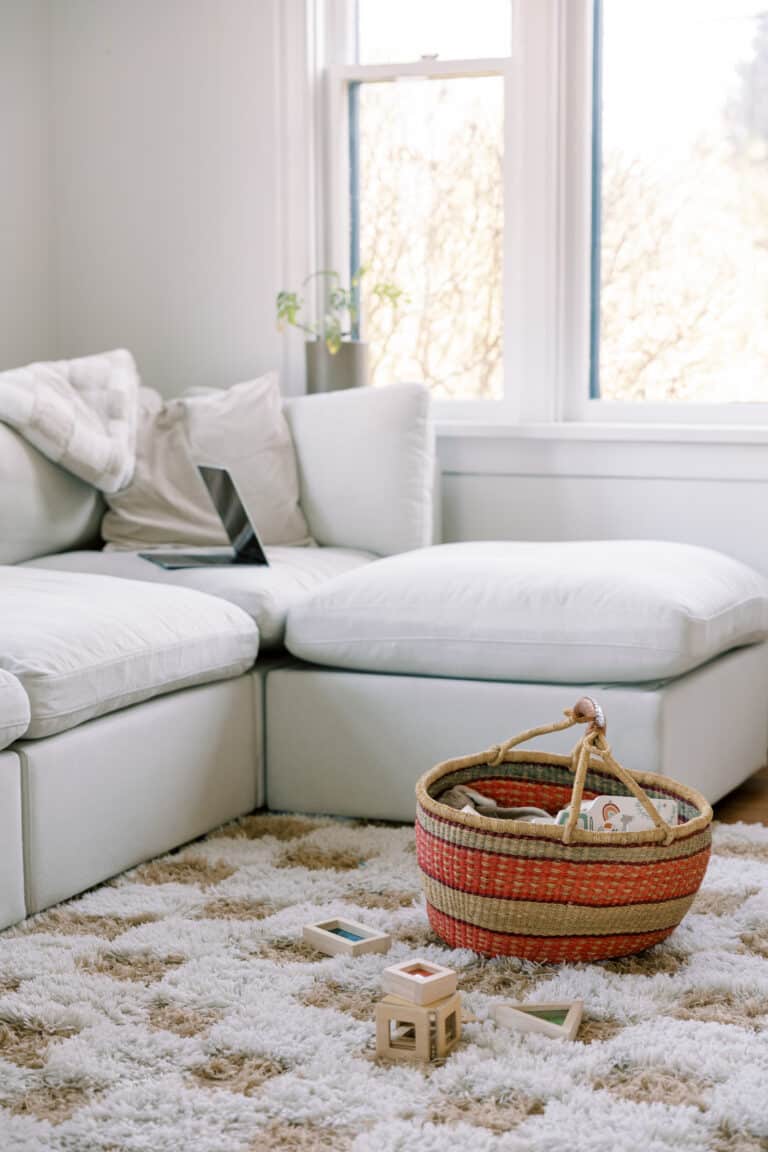
A good rug can establish the color palette, add warmth and texture, define a seating area, and make the entire room feel more finished.
A cheap rug can also make an otherwise beautiful room feel… well, cheap.
And I don’t necessarily mean you need to spend thousands of dollars on a rug. There are plenty of ways to find beautiful rugs at reasonable prices. Hello, Costco.
I would rather have one really good rug than several inexpensive rugs that don’t quite work.
Pay attention to scale, too. A rug that is too small can make a small room feel even more chopped up. Sometimes the more luxurious-looking choice is actually the larger rug that visually connects the furniture and creates one cohesive space.
Again, we’re looking for things that work harder.
Think of it as part of the room’s architecture.
6. Don’t Discount Vertical Space
When you don’t have much floor space, look up.
Seriously.
The walls above your furniture, the space above doorways, tall shelving, floor-to-ceiling curtains, vertical artwork, and even tall plants can all help a room feel more finished without making the footprint any larger.
But there’s an important distinction here:
Using vertical space doesn’t mean filling every inch of wall.
A small room can quickly feel cluttered if every available surface becomes an opportunity to put something.
Think about height strategically.
A tall bookcase can provide storage and draw the eye upward. Curtains hung higher can make a room feel taller. One large piece of artwork can have more impact than a gallery wall of twelve smaller pieces.
The goal isn’t to cram more into the room.
It’s to make better use of the space you already have.
7. Be Strategic About What Comes Into Your Home
This may be the most important one.
Because here’s the thing about a small space:
If you buy it, it has to live somewhere.
And suddenly that $25 purchase doesn’t just cost $25. It costs you a little bit of your limited space.
Before bringing something home, I’ve started thinking about alternatives:
Can I rent it?
Can I borrow it?
Can I go without it?
Do I really need to own it?
Could I buy an outdoor version instead?
Could I choose something that serves more than one purpose?
On occasion, deciding you don’t need another thing at all is better than buying a pretty something.
8. Be Strategic About What Goes Out
Being intentional about what comes into your home is only half the equation.
You also have to be willing to let things leave.
Especially in a small space, I think it’s worth regularly asking: Does this still serve our family?
Not Is this still useful?
Not Did I spend money on it?
Not Could I possibly need it someday?
Does it still serve us now?
Families change. Kids grow. Interests change. Your routines change. Sometimes the thing that was incredibly useful two years ago is now just taking up valuable space.
And sometimes you keep something simply because you’ve always had it.
That’s when I think it’s time to take another look.
A small space doesn’t necessarily require ruthless minimalism. But it does benefit from constant editing.
If something is broken, unused, outgrown, duplicated, or simply making your home harder to live in, consider letting it go.
And I won’t tell you the process is always painless.
When my kiddo was 2 they were obsessed with the Cars movie. We spent a fortune buying every character we could possibly collect, only to outgrow the show after a couple years.
Who would have guessed that around nine or ten, they would come back around to a Cars phase? I still ache a little when I think about those bins of Cars toys, which would have been very well-loved all over again.
Then I come to my senses and think about what we would have missed out on if we hadn’t freed up that space.
Is a sentimental ache that lasts a few moments (or even months!) better than chronic pain from years of not having enough space?
Little by little, you can keep your home working for the life your family is actually living now.
Because there’s a quiet luxury in opening a cabinet and finding what you need.
There’s luxury in having room to put things away.
There’s luxury in not having to move five things to get to the one thing you actually use.
And perhaps most importantly, there’s freedom in realizing that you don’t have to keep owning something just because it once served you well.
Your home should support the life you’re living today—not preserve every version of the life you’ve lived before.
9. Don’t Forget the Space Outside Your House
If you’re running out of room inside, your first instinct might be to add on.
But before you start planning a new room, look at what’s available outside your four walls.
A well-designed shed, detached storage building, or other outdoor structure can give you valuable storage without requiring you to add conditioned square footage to the house.
Think about the things you need to store but don’t necessarily need to access every day: seasonal decorations, bikes, lawn equipment, camping gear, sports equipment, tools, luggage, and all those other things that seem to multiply when you have a family.
And depending on your local regulations, an outdoor structure may be considerably less expensive than adding finished space to your home because you may not need things like HVAC, plumbing, or the same level of interior finish.
Just be sure to check your city’s permitting, zoning, setback, and property-tax rules before you build.
An outdoor storage can allow you to think through where your family’s stuff actually needs to live.
Sometimes the smartest way to create more room in your house is to put the things that don’t need to be in the house somewhere else.
A Small Space Can Still Feel Luxurious
Especially in a smaller home, luxury can look like having exactly what you want and not much that you don’t.
A beautiful built-in instead of a collection of storage furniture.
One great floral arrangement instead of a dozen little decorations.
Books you actually love.
Beautiful windows and doors that become part of the design.
Vertical space used thoughtfully.
And enough restraint to say no to things that will eventually become clutter.
Affordable luxury living is being intentional about what you spend on, what you display, and what you allow to come through the front door.